
Stair Lifts vs. Vertical Platform Lifts: Choosing the Right Solution for Your Home
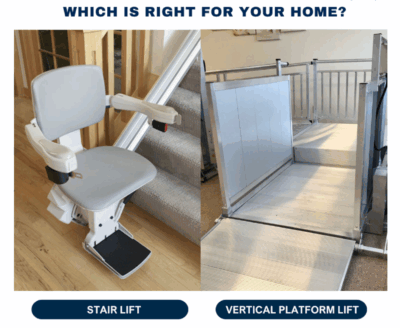
For homeowners facing mobility challenges, navigating stairs can be a major hurdle to maintaining independence and enjoying full access to their homes. If you’re in South Central Michigan, you’re likely familiar with homes that weren’t necessarily designed with accessibility in mind. Fortunately, there are solutions! Stair lifts and vertical platform lifts (VPLs) are two popular options that can significantly improve accessibility, but understanding their key differences is crucial to making the right choice for your specific needs and home.
Key Differences at a Glance:
- Stair Lifts: Ideal for individuals who can walk but struggle with stairs. They offer a cost-effective solution for navigating staircases.
- Vertical Platform Lifts (VPLs): Designed for individuals who use wheelchairs or scooters, providing full access between different levels of a home or to elevated entryways.
Let’s delve deeper into each option:
Understanding Stair Lifts
A stair lift is a motorized chair that travels along a rail system installed on your staircase. It allows you to sit comfortably and safely ascend or descend stairs at the push of a button.
Advantages of Stair Lifts:
- Space-Saving Design: Stair lifts are a great option for narrow staircases because the chair can fold up when not in use, leaving the staircase largely unobstructed.
- Relatively Quick Installation: A straight stair lift can typically be installed in just a few hours, minimizing disruption to your home. Curved stair lifts take longer due to the custom design of the rail.
- Cost-Effective Solution: Stair lifts are generally more affordable than other accessibility solutions like elevators or VPLs.
- Enhanced Safety: Stair lifts reduce the risk of falls, which are a common concern on stairs, especially for seniors or those with mobility limitations. Features like seat belts and emergency stop buttons provide added security.
- Promotes Independence: Regain independence and freedom by easily accessing all levels of your home without assistance.
- Option to Age-in-Place: A stair lift provides the option to remain in the comfort of your own home, rather than move to a single-story house or assisted living facility.
Considerations:
- Transfer Required: Users must be able to transfer from a wheelchair or other mobility device to the stair lift seat.
- Not Wheelchair Accessible: Stair lifts do not transport wheelchairs. A separate wheelchair may be needed on each level of the home.
Exploring Vertical Platform Lifts (VPLs)
Vertical platform lifts, sometimes referred to as “wheelchair lifts” or “porch lifts,” are designed to lift individuals in wheelchairs or scooters vertically from one level to another. They function similarly to elevators but are more compact and suitable for shorter distances.
Advantages of Vertical Platform Lifts:
- Full Wheelchair Accessibility: VPLs allow users to remain in their wheelchair or scooter during transit, eliminating the need for transfers.
- Versatile Installation: Suitable for both indoor and outdoor use, providing access to porches, decks, raised entryways, and multiple levels within a home.
- High Weight Capacity: Can accommodate heavier loads, including power wheelchairs and caregivers.
- Enhanced Mobility and Accessibility: VPLs eliminate barriers by providing direct, smooth transportation between levels, allowing users to move independently without the need for ramps or stairs.
- Safety and Security Features: Modern lifts come equipped with integrated safety sensors, emergency stops, and locking mechanisms.
- Space-Efficient Design: Compared to ramps, which require extensive space to accommodate height changes, VPLs provide a compact solution, particularly important in areas with limited space.
- Durable for Indoor and Outdoor Use: Designed to withstand various environmental conditions, outdoor models feature corrosion-resistant materials and protective finishes to endure rain, snow, and temperature changes, ensuring long-term functionality.
- Easy to Use: With easy-to-use controls, call/send stations, and optional power-operated gates, VPLs prioritize convenience. Battery backup options ensure continued operation during power outages.
Considerations:
- Space Requirements: VPLs require adequate space for installation, including a level surface or concrete pad for support.
- Higher Cost: Generally more expensive than stair lifts due to the equipment and installation requirements.
- Permits: Installation may require building permits to ensure compliance with local codes.
Stair Lift vs. Vertical Platform Lift: Which is Right for You?
Here’s a quick guide to help you determine which solution might be the best fit:
Consider a Stair Lift if:
- You can transfer independently from a wheelchair or other mobility device to a seated position.
- You have sufficient upper body strength and balance to sit upright during operation.
- Your primary challenge is navigating stairs, not a complete inability to walk.
- You’re looking for a more cost-effective and space-saving solution.
Consider a Vertical Platform Lift if:
- You use a wheelchair or scooter full-time and cannot easily transfer.
- You need access to an elevated entryway, porch, or deck.
- Your home has multiple levels without adequate space for a ramp.
- You prefer to avoid transfers between mobility devices.
Local Expertise in South Central Michigan
At AgeWell Home Solutions, we understand the unique challenges faced by homeowners in Calhoun County and the surrounding areas when it comes to home accessibility. Our team is dedicated to providing tailored mobility solutions that improve your safety, independence, and quality of life.
Our Services Include:
- Stair Lift Installation
- Vertical Platform Lift Installation
- Accessible Bathroom Renovations
- Grab Bar Installation
- Wheelchair Ramp Construction
- And More!
Ready to Take the Next Step?
Choosing between a stair lift and a vertical platform lift is a significant decision, but you don’t have to make it alone. Contact AgeWell Home Solutions today to schedule a free, no-obligation home assessment. Our experienced professionals will evaluate your needs, assess your home’s layout, and recommend the best solution to help you regain full access to your home. We’re here to guide you every step of the way!
Frequently Asked Questions
- What’s the main difference between a stair lift and a vertical platform lift?
Stair lifts are designed for individuals who can transfer to a seat and primarily need assistance with stairs. Vertical platform lifts are designed for wheelchair or scooter users who require full mobility support between levels.
- Do I need a permit to install a vertical platform lift?
Permit requirements vary by location. We handle all permitting to ensure compliance with local codes.
- Which is more cost-effective: stair lifts or vertical platform lifts?
Stair lifts are generally more affordable, especially for straight staircases. Vertical platform lifts have higher upfront costs but are necessary for wheelchair users.
- Can AgeWell Home Solutions install stair lifts on curved staircases?
Yes, we offer custom solutions for straight, curved, and multi-level staircases.
- Are financing options available?
We can discuss potential financing options and programs to help make accessibility solutions more affordable.
AgeWell Home Solutions – Helping you live more comfortably and independently in your home.
Are you interested in discussing your home safety needs?
Give us a call
(269) 967-6152
Or send a message to get in touch with a certified Senior Home Safety Specialist®
Related Posts
Choosing the Right Home Improvement Company: Why AgeWell Home Solutions Stands Out
Senior-Focused Home Modifications: Transparent, Trusted, Tailored

Money Matters: Explore Your Funding Options for Home Modifications Beyond Just Writing a Check!
Unlock a World of Possibilities to Make Your Home Accessible and Comfortable!

Transform Your Bathroom Safety with Cut-In Tub to Shower Conversions
An affordable solution to enhance accessibility and reduce fall risks.

Creating In-Law Suites: A Favorable Alternative to Assisted Living
Discover how in-law suites can provide independence and comfort for your aging loved ones while keeping them close to family.